If you’re after a garden that encourages quiet moments and a slower pace, you don’t need to overthink it. These 23 ideas focus on natural beauty and simple touches, showing you how to bring that peaceful, graceful feeling right into your outdoor space.
Frame Garden Views with Wooden Veranda Railing
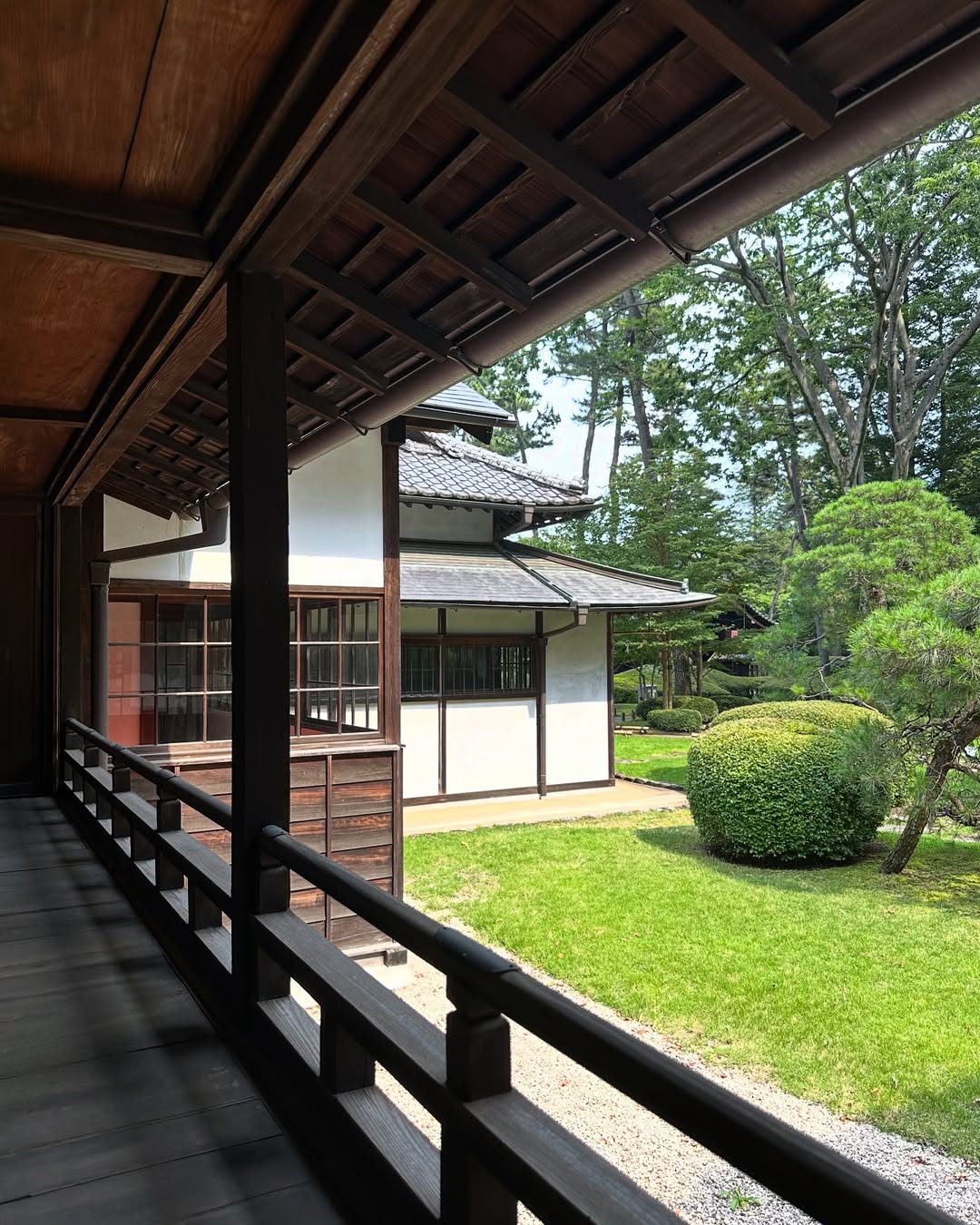
A dark wooden veranda railing works to frame the view of a meticulously kept lawn and a sculpted hedge, creating a natural boundary that guides the eye towards the garden space beyond.
Soften Stone Paths with Plush Moss Gardens
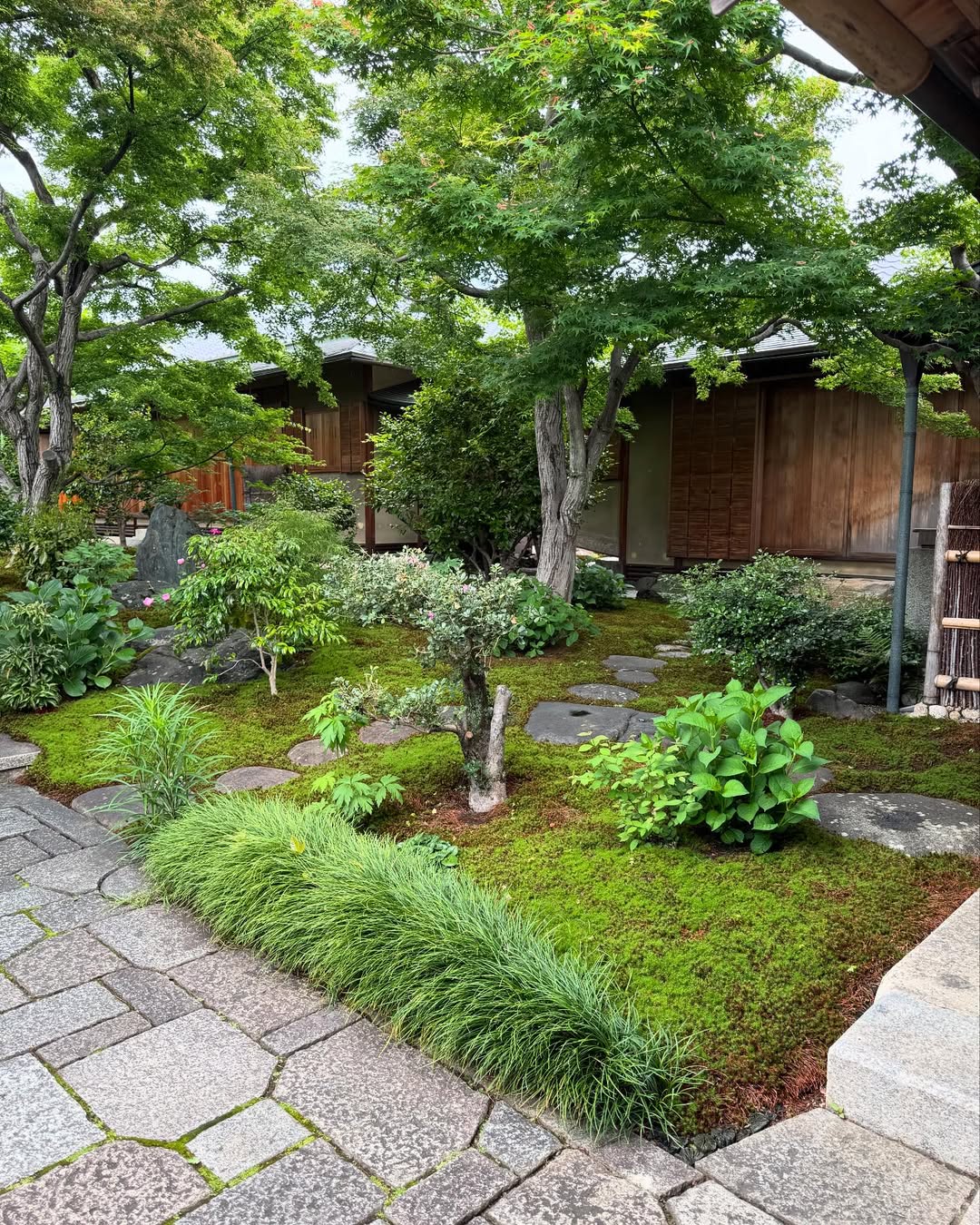
A thick carpet of moss provides plush contrast alongside your stone pathways. This living ground cover softens the garden’s appearance.
Plant moss to invite calm where hardscaping meets the landscape.
Define Pond Edges with Traditional Stone Lanterns
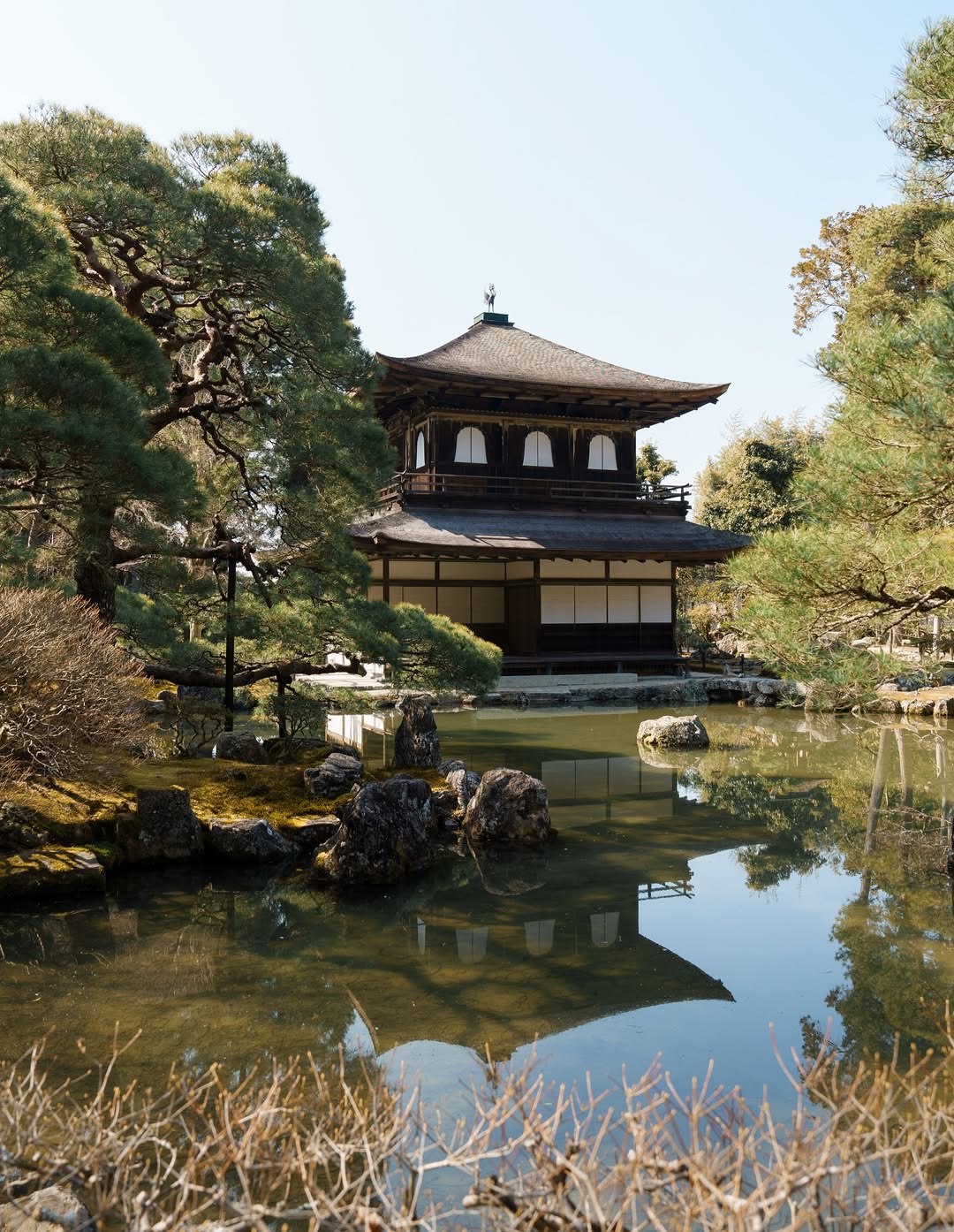
If you’re looking to define the boundaries of your garden pond, natural stone lanterns can add a traditional design element. Placed amongst mossy rocks and water, they create a visually appealing transition between land and water features.
Moss-Covered Boulders Creating Naturalistic Garden Layers
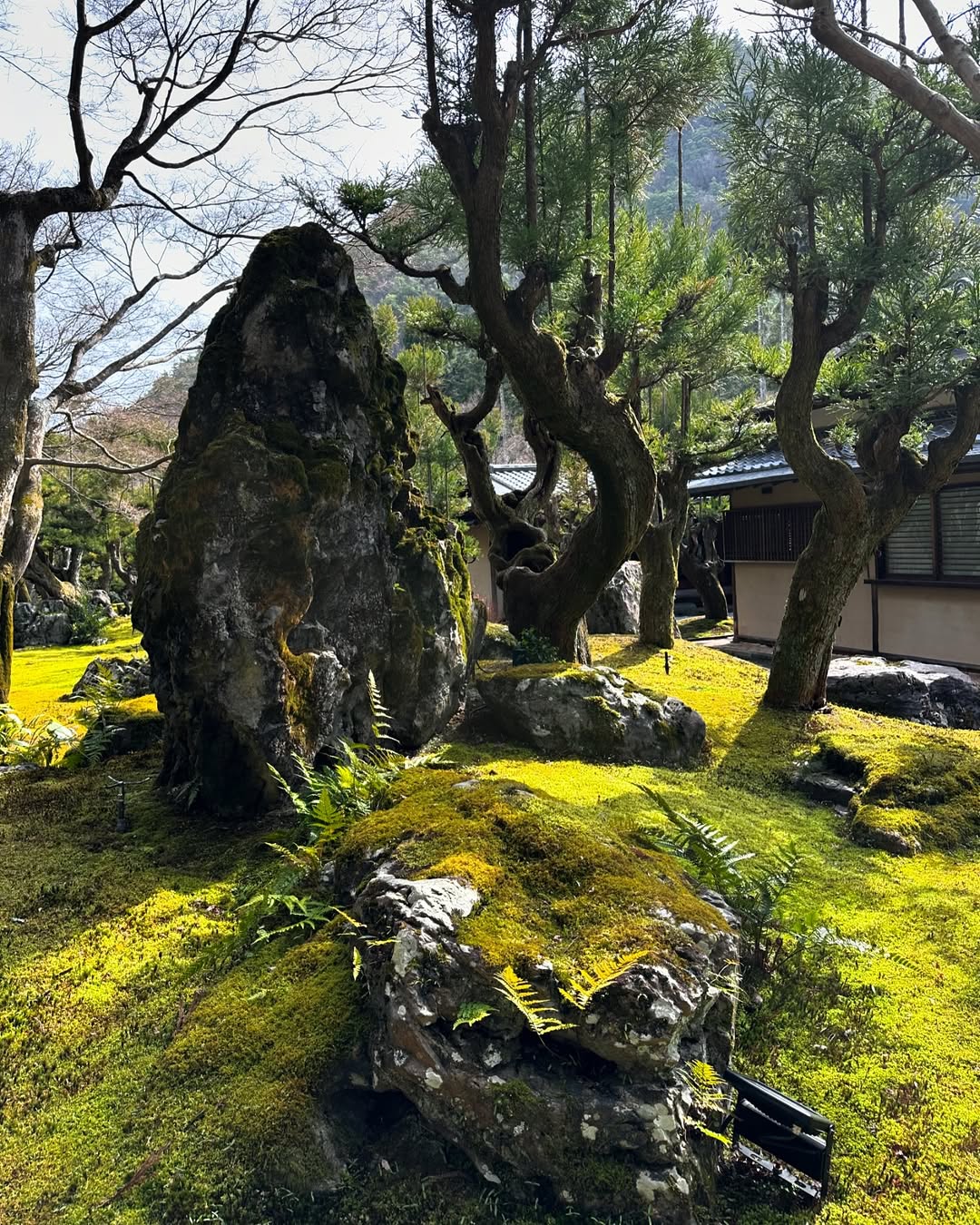
Large, moss-covered boulders add a sense of age and organic texture to your garden landscape. Softened by moss and delicate ferns, these natural elements provide grounding weight.
Their varied sizes and placements break up open spaces with physical forms.
Sculpt Juniper Bushes into Cloud-Like Forms
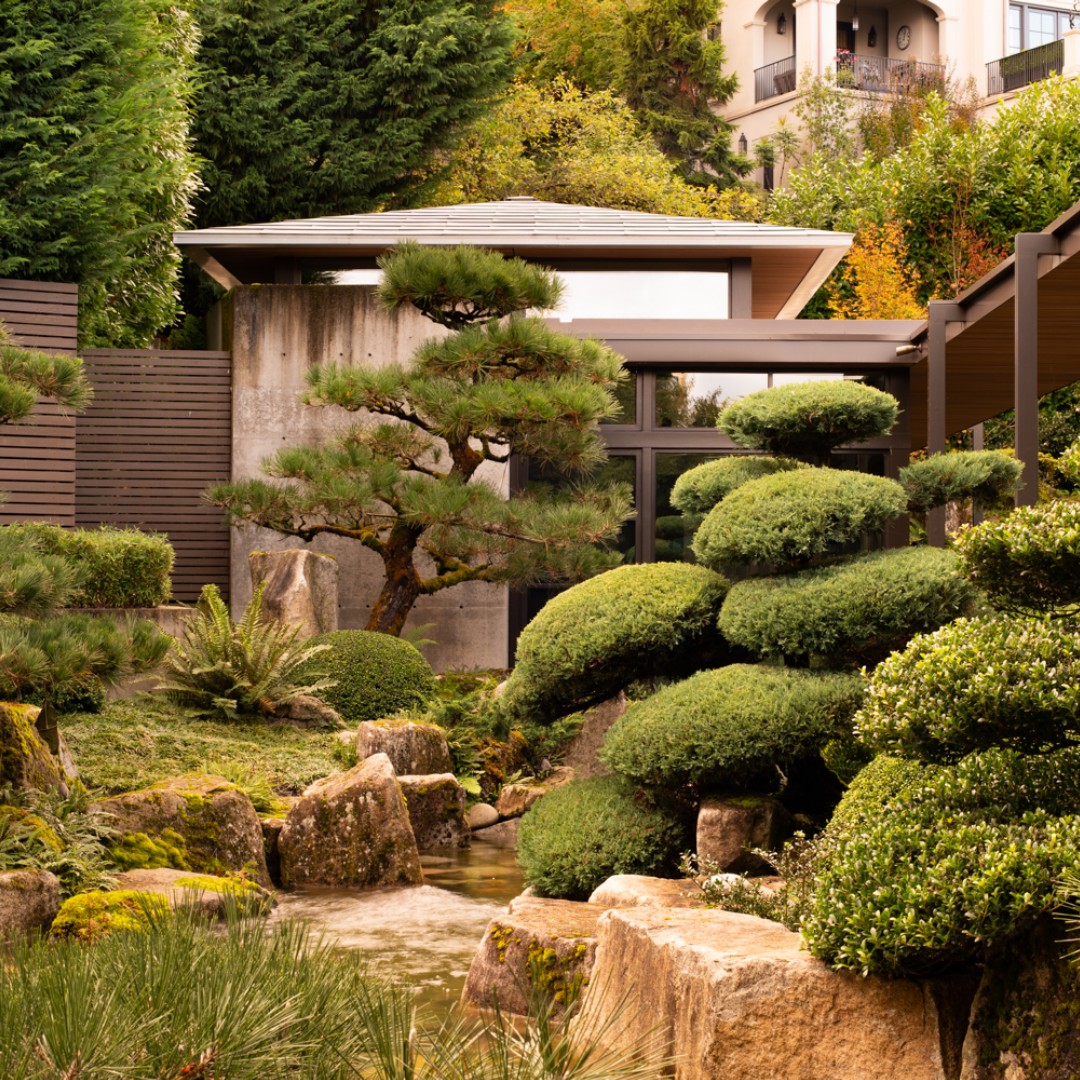
Sculpt juniper bushes into rounded, cloud-like shapes for a soft texture in your garden. Their dense foliage, precisely trimmed, will create a distinct contrast against nearby stones and water features.
Flat Stone Slabs Create a Gentle Garden Path
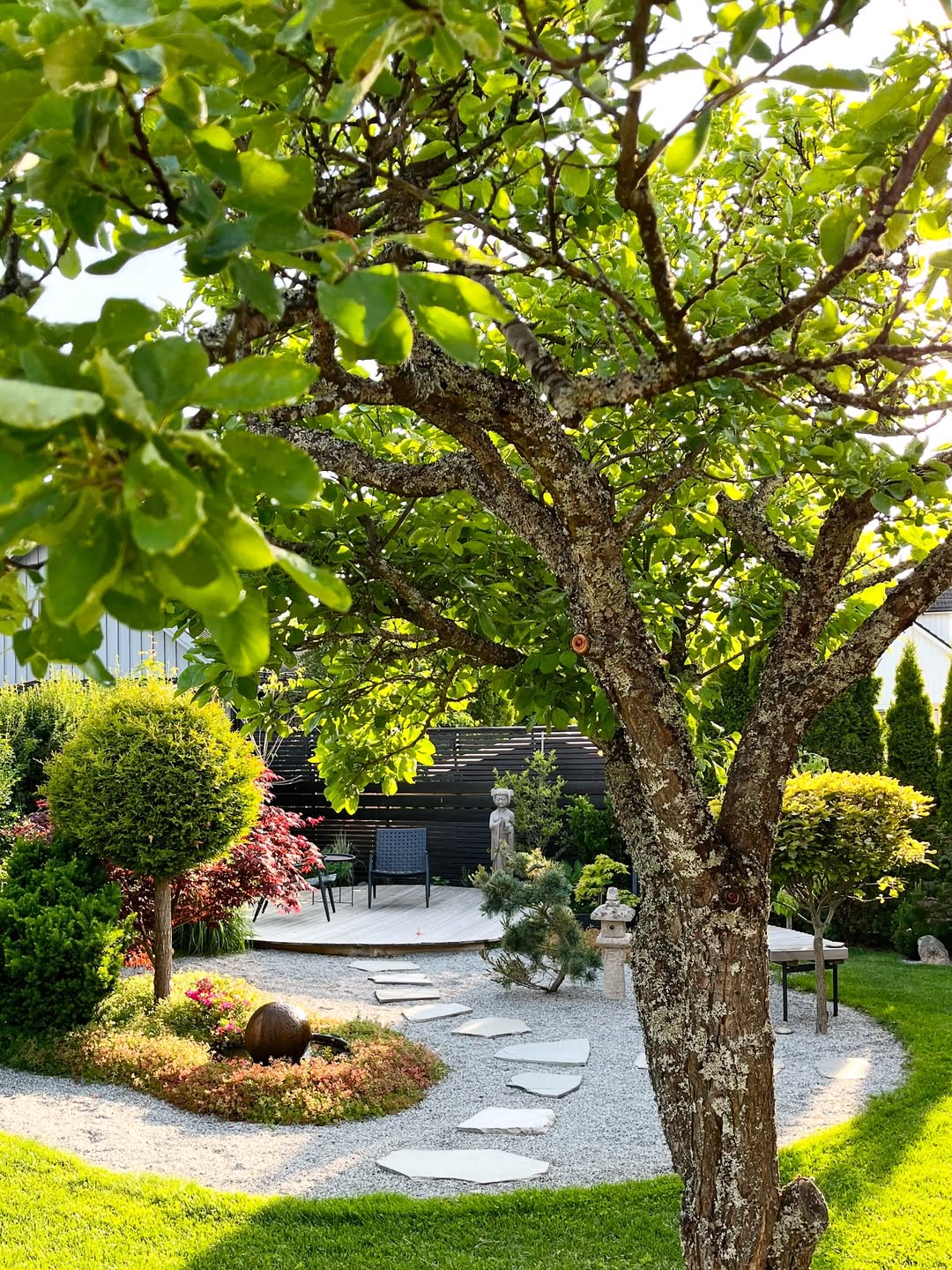
Directly into a gravel bed, flat stone slabs create a natural garden path. The gravel flows around these stones, which softens their edges.
Pagoda Rooflines Add Architectural Interest to Gardens

A multi-tiered pagoda structure with its distinct, layered rooflines brings a unique architectural element to your garden, drawing the eye upwards amidst the nearby plants. It adds vertical accent.
Wooden Shelving Units For Layered Bonsai Displays
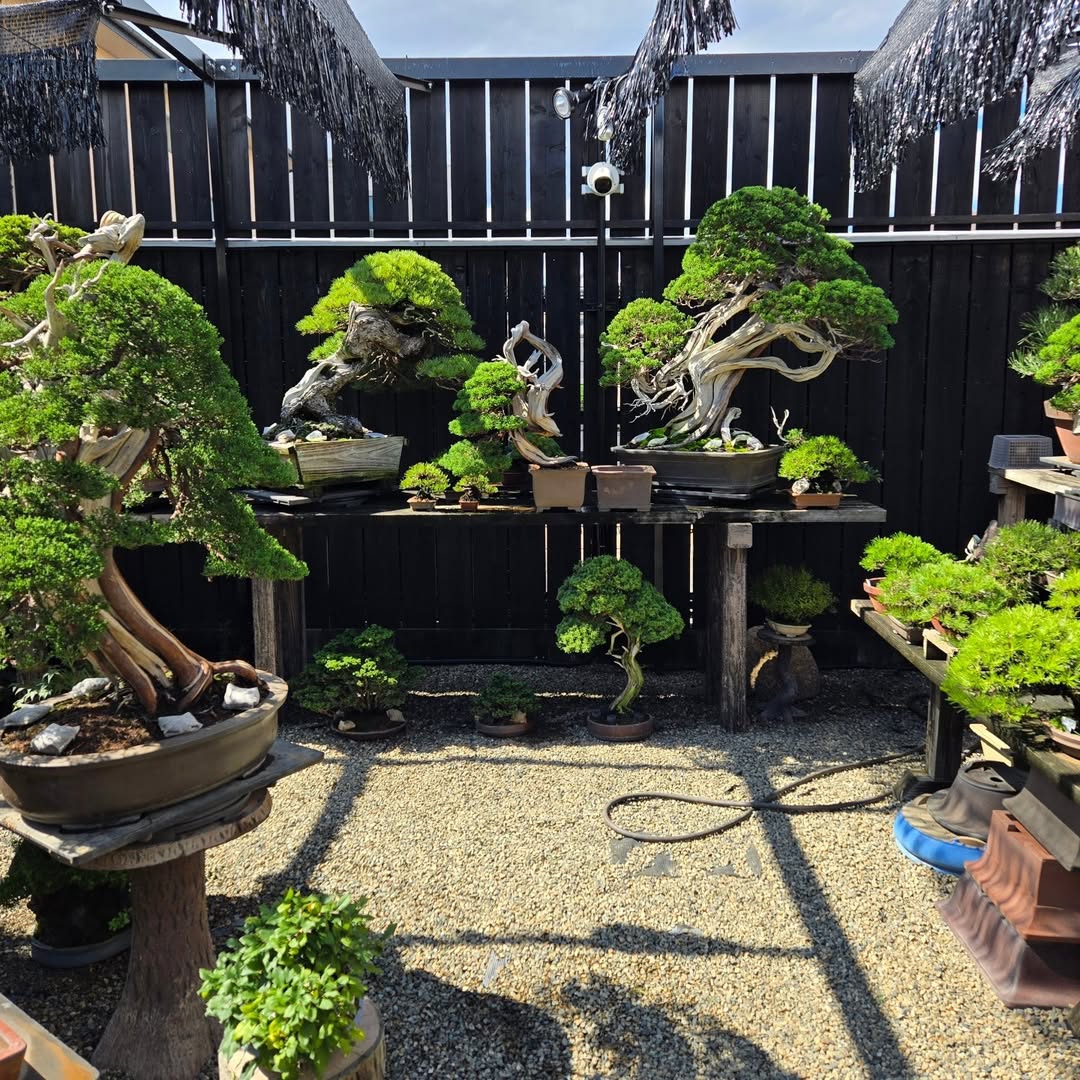
Arrange bonsai trees on tiered wooden shelves to create visual depth in your garden. The dark wood shelves contrast with the green foliage, highlighting each miniature tree.
Design Curved Stone Paths with Mossy Islands
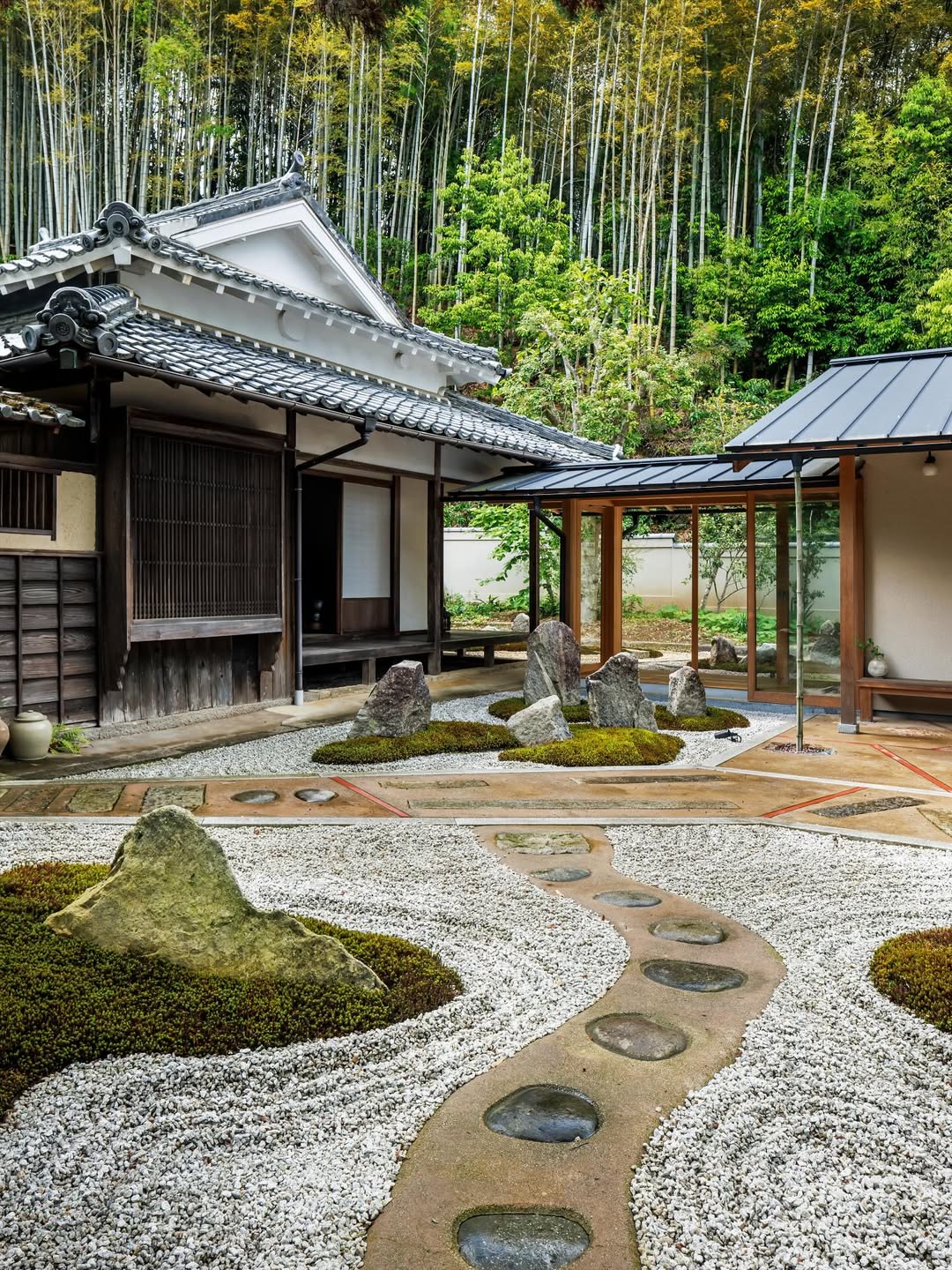
A winding path of flat, irregular stones laid into white gravel creates movement. Small, rounded mounds of moss surround these stepping stones.
This softens the hard edges of the stone and gravel.
Weave Winding Gravel Paths Through Mossy Mounds
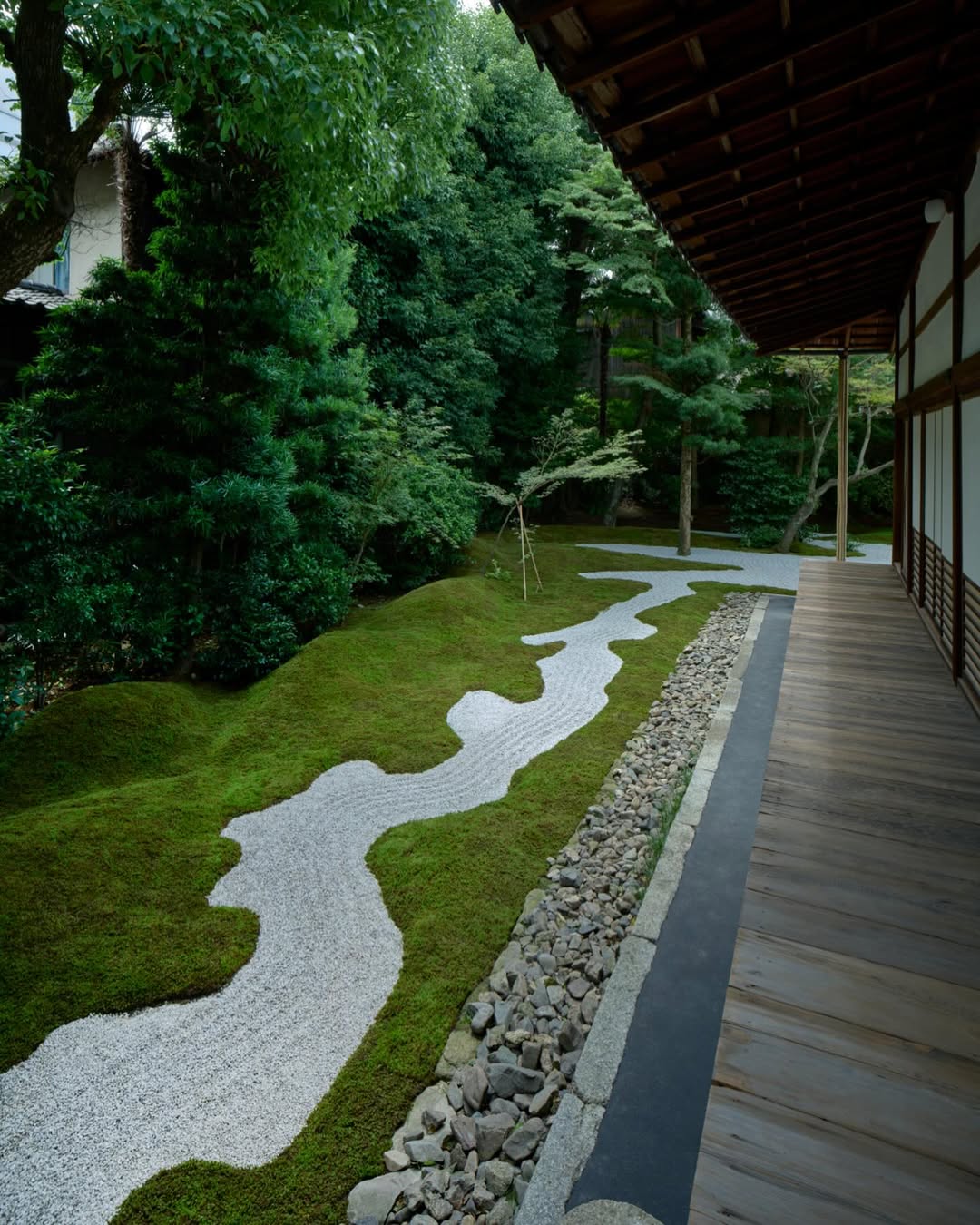
Light-colored gravel creates a winding path through the garden. It flows organically through undulating mounds of deep moss.
Mossy Islands With Sculpted Rocks Create Zen Garden Focal Points
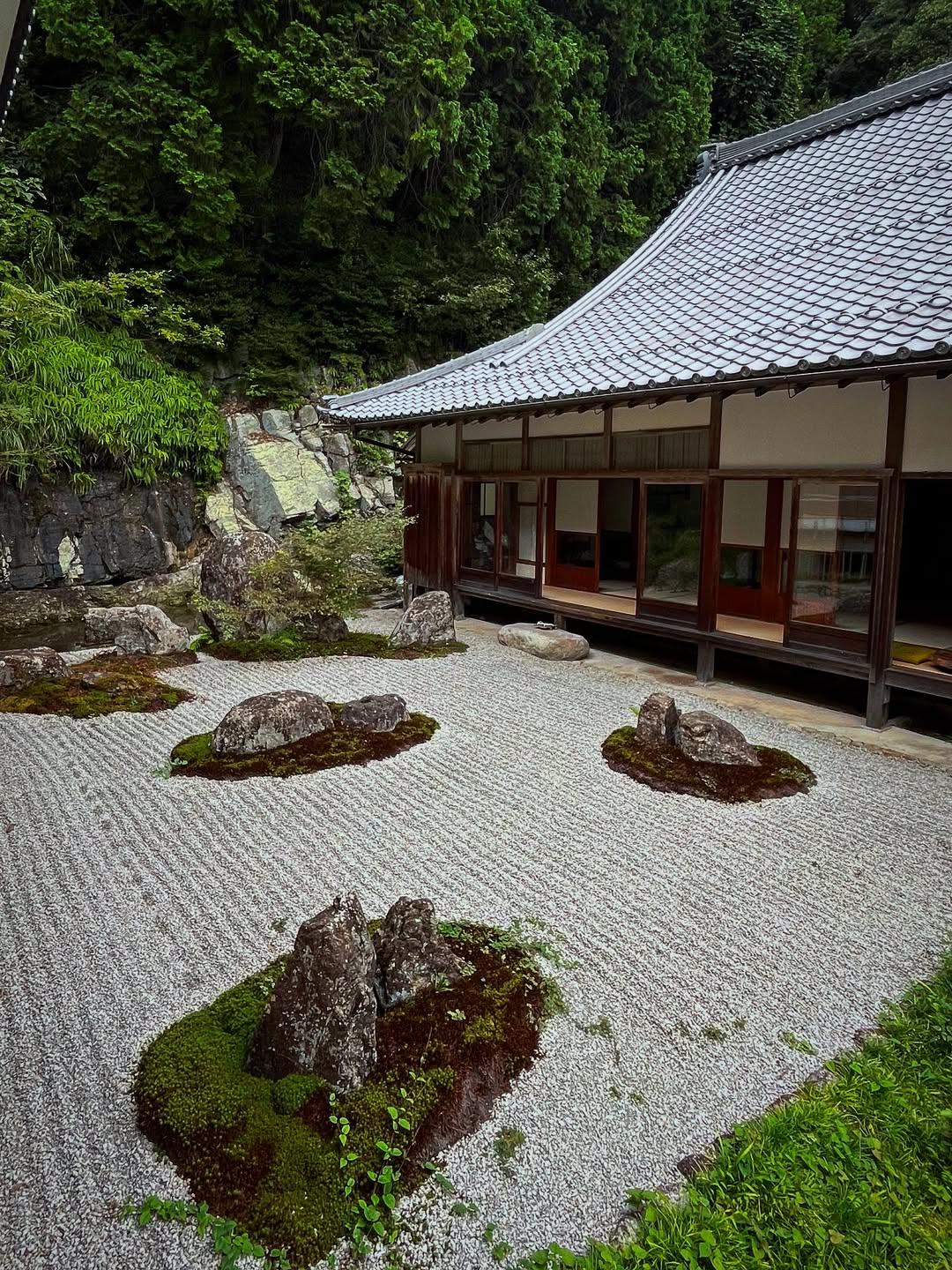
If your raked gravel garden needs a more naturalistic focal point, try arranging clusters of moss and rocks. These organic shapes, with their varying heights, will break up the expanse of stone.
Anchor a Mossy Corner with a Stone Water Basin
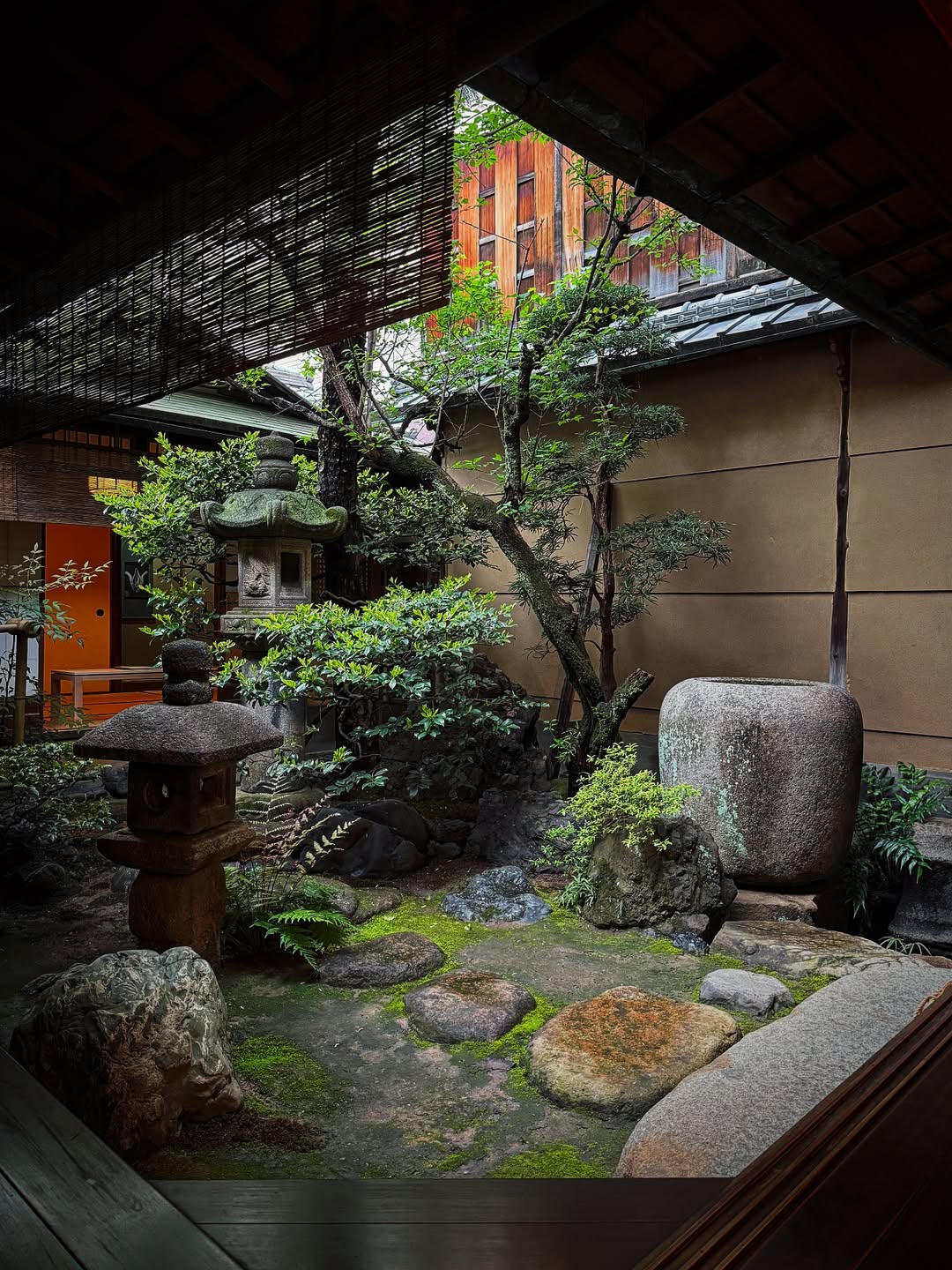
A large, rough-hewn stone basin makes a naturalistic water feature when placed as a focal point in a garden corner amongst mossy rocks and greenery, perhaps near a stone lantern.
Stone Lanterns With Carved Figures Add Detail
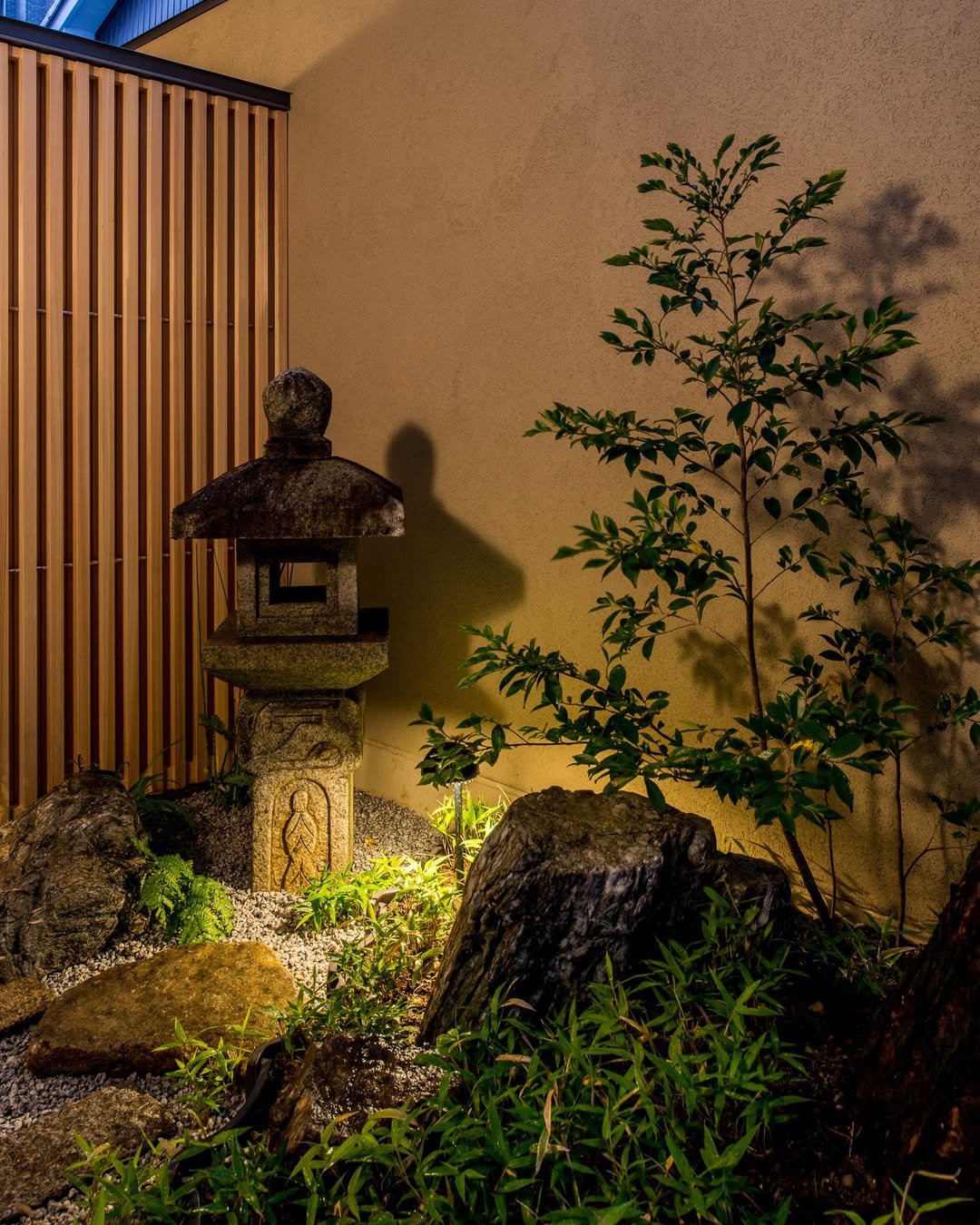
A weathered stone lantern with detailed carvings creates a unique design element in your garden. The carved figure on its base adds historical depth.
Place it amidst rocks and greenery for a grounded, artistic display.
Stone Lanterns Add Focal Points To White Gravel Gardens
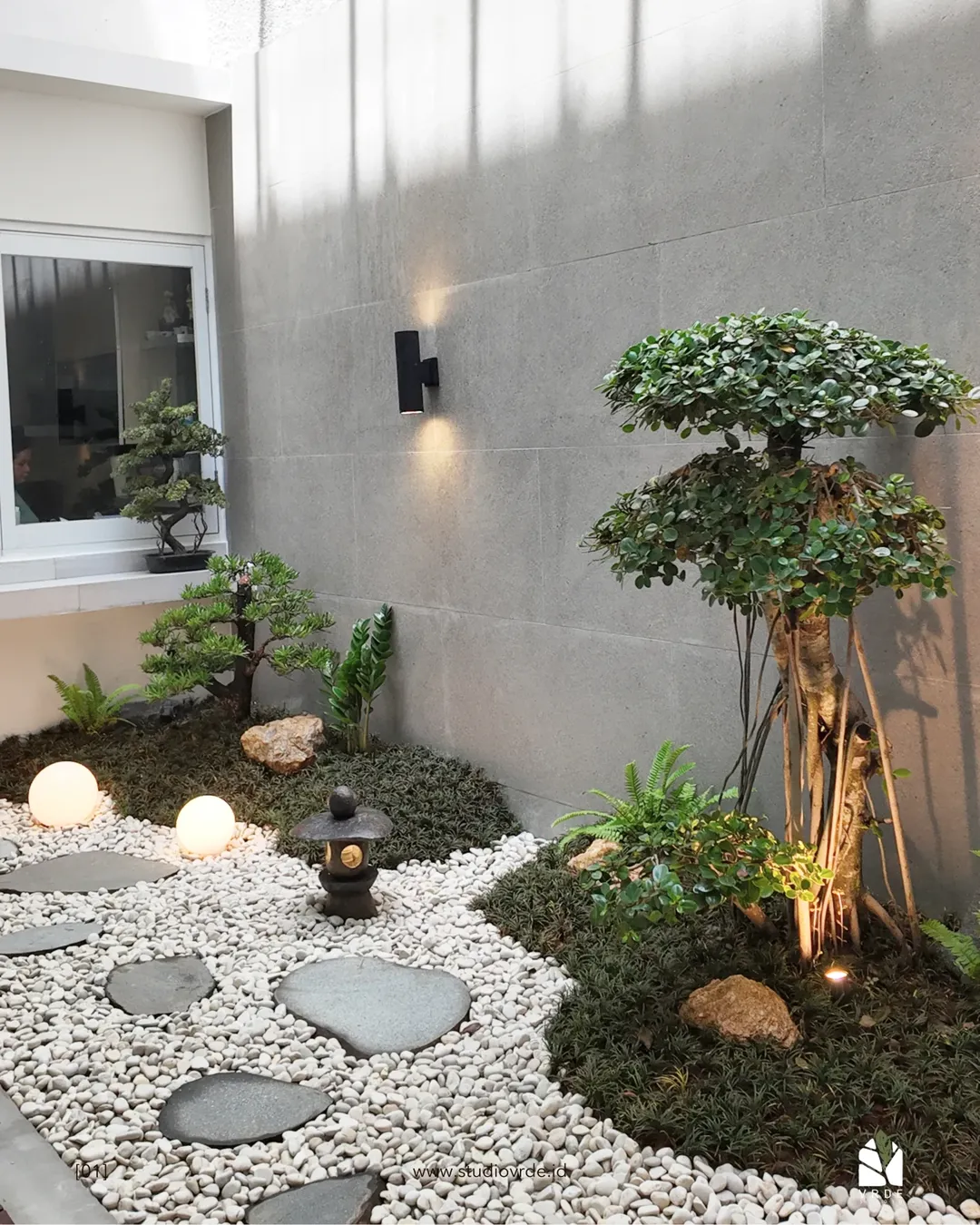
In a section of white gravel, a small, dark stone lantern can serve as a point of interest. Its dark material helps break up the expanse of small stones and complements the nearby plants.
Wooden Fencing With Integrated Signage Creates a Welcoming Entry
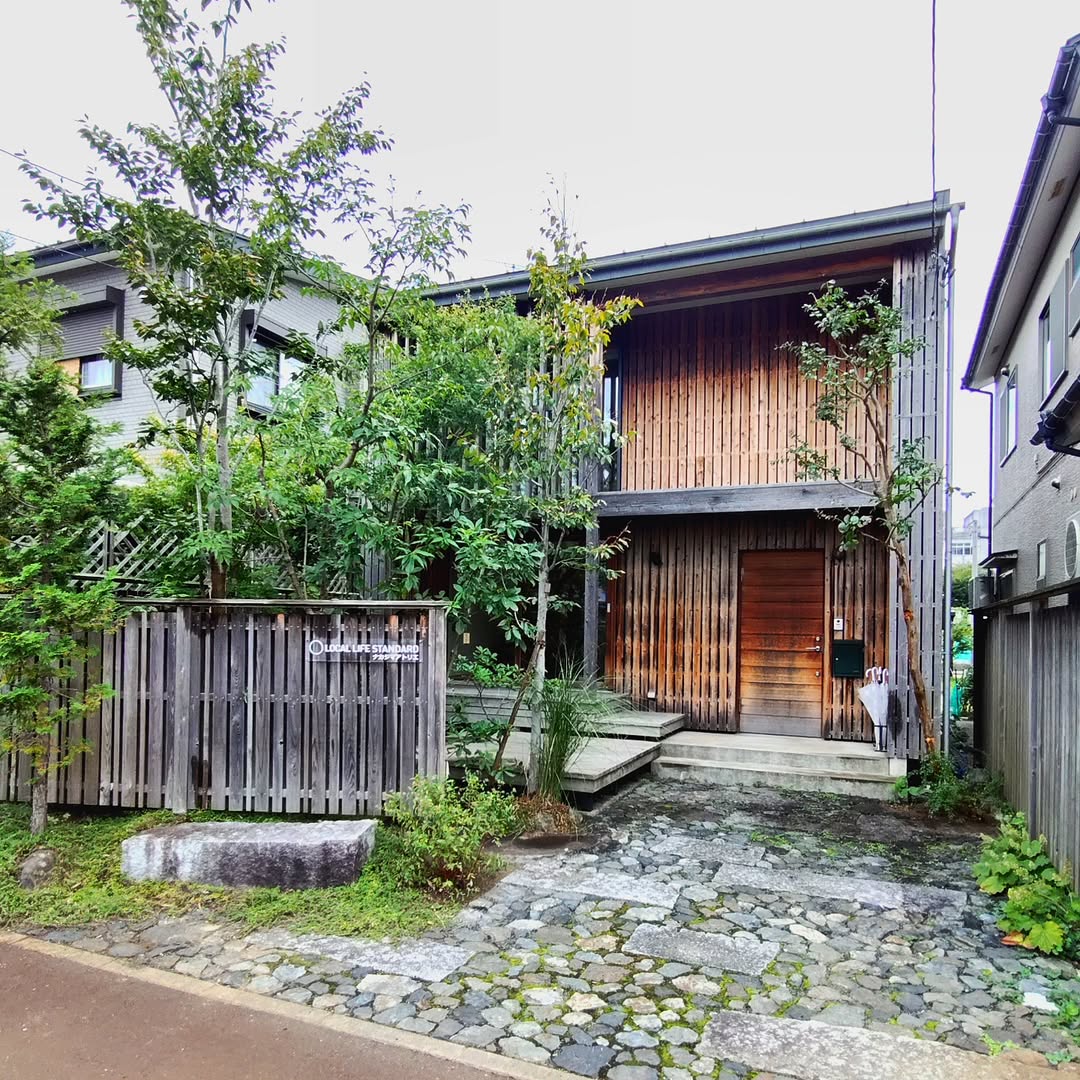
If you’re looking for a rustic garden enclosure, a weathered wooden fence with vertical slats works well. You can incorporate a small, discreet sign onto the fence panels to provide clear identification or a welcoming message for visitors.
Wooden Boat Adds a Rustic Accent to Water Gardens
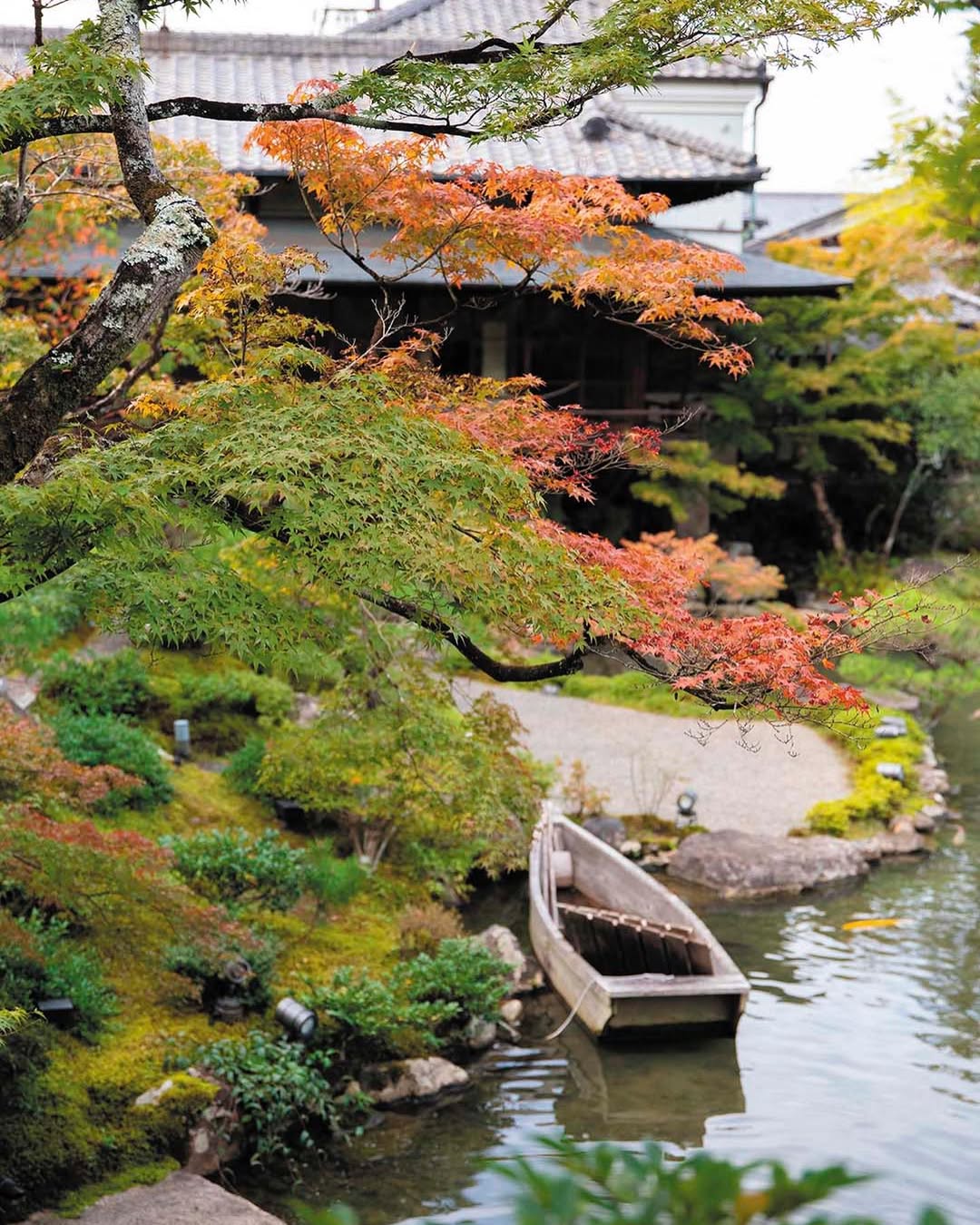
Add a weathered wooden boat to your garden’s water features for a rustic element. Moored near the edge of a pond or stream, this simple vessel complements mossy banks.
Low Wooden Platforms Create Modern Transitions
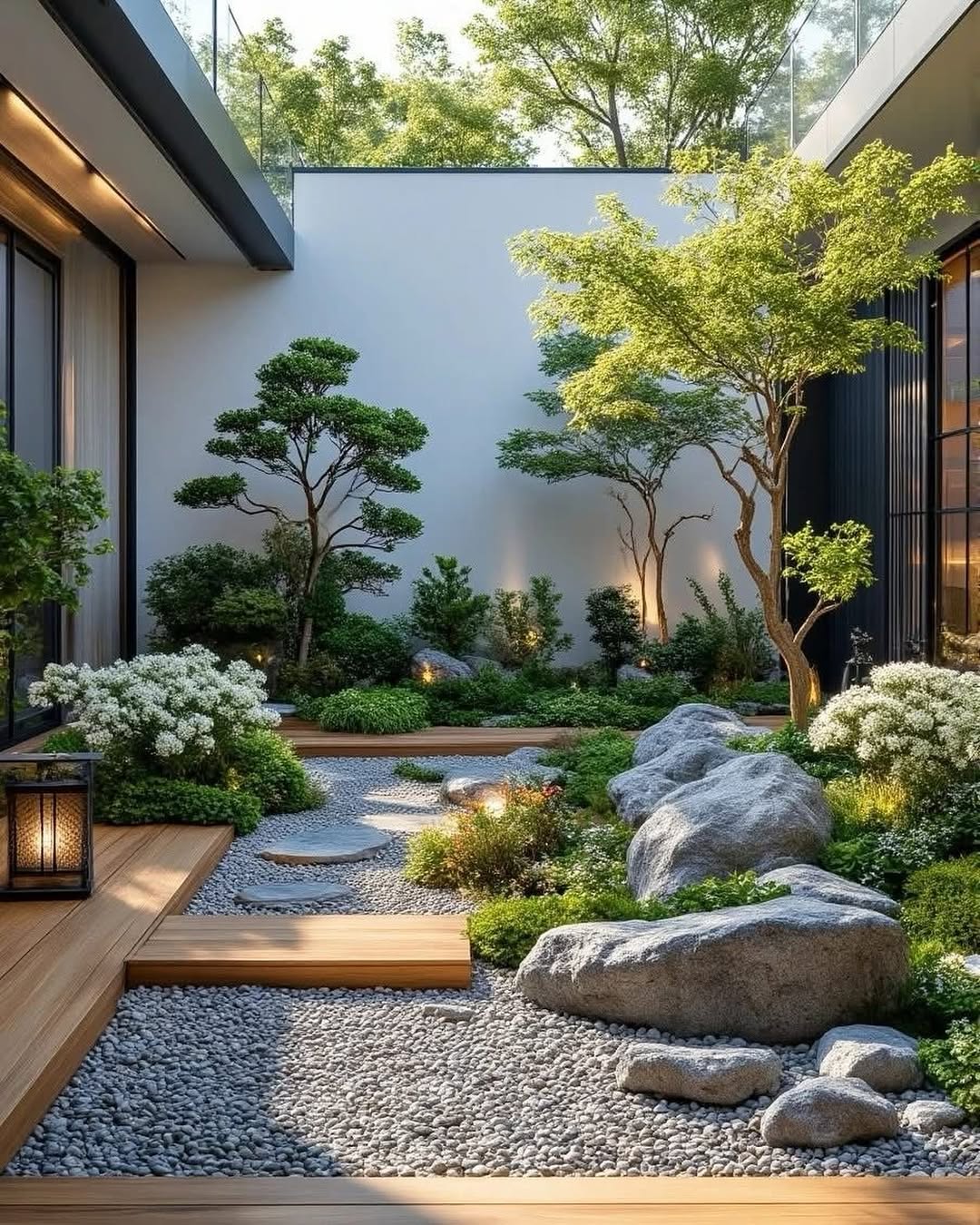
If you need to define distinct zones within your garden, low, wide wooden platforms offer a contemporary solution. Set against gravel beds and natural stone arrangements, they provide a stable surface that connects a wooden deck with the nearby plants.
Guide Guests to Pavilions with Stone Stepping Stones
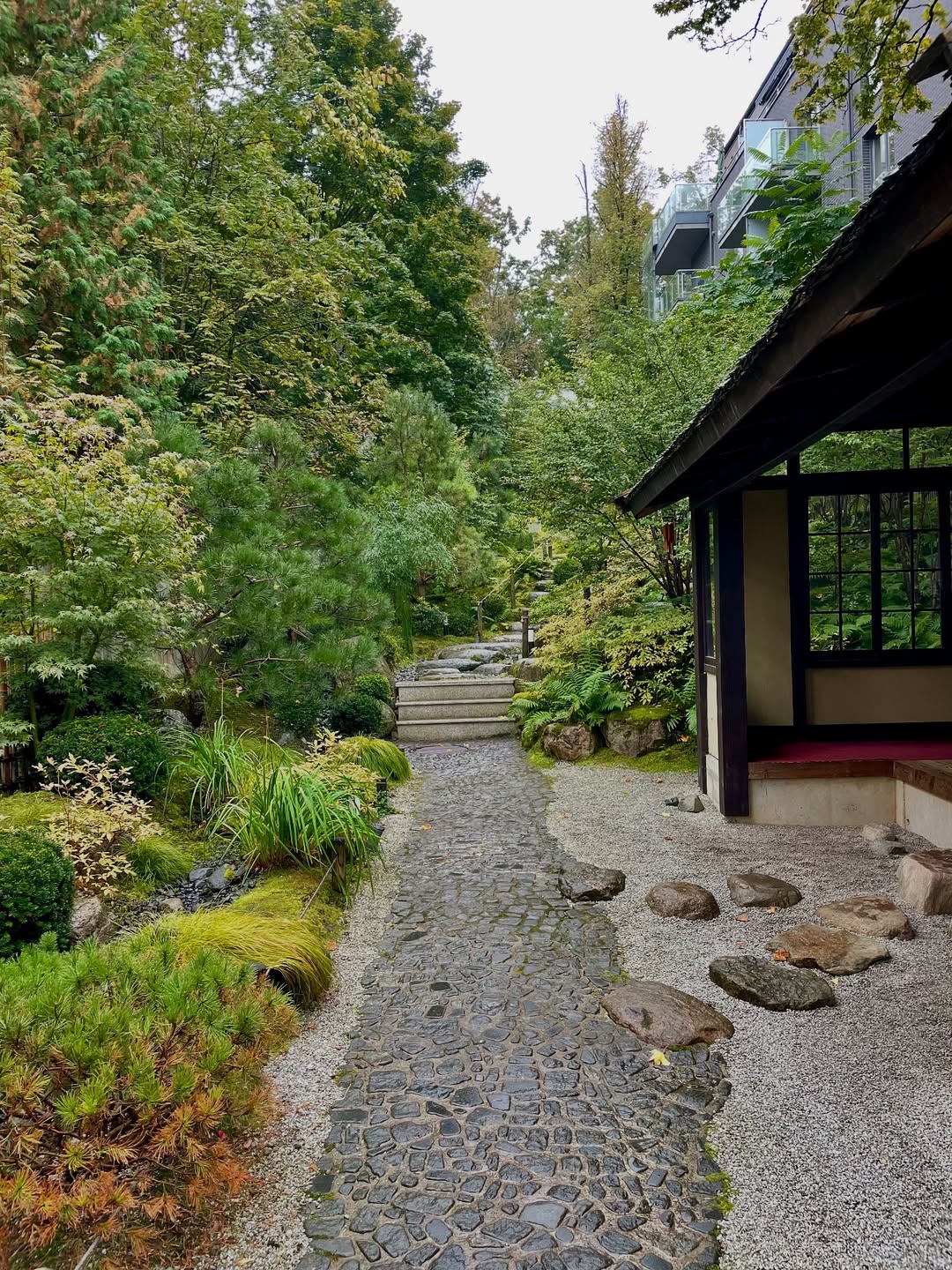
Large, rounded stones on a bed of fine gravel create a natural transition from your path to a garden structure. These stones soften the edge of the gravel area and indicate where to step, inviting a slower pace.
Form Natural Paths with Rounded Stepping Stones
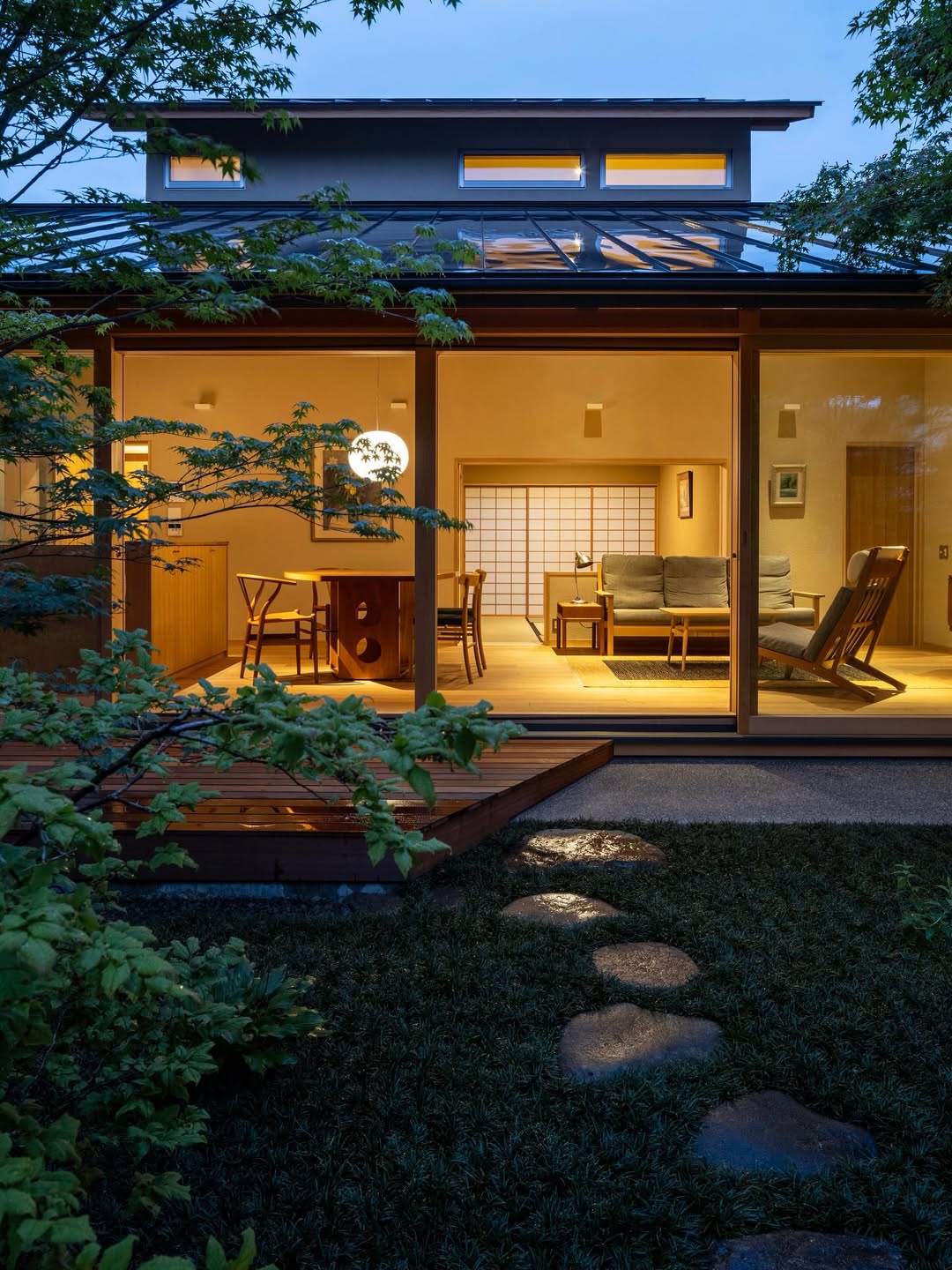
Large, rounded stones on dense ground cover create a gentle, meandering path.
Anchor a Mossy Corner with a Classic Stone Lantern
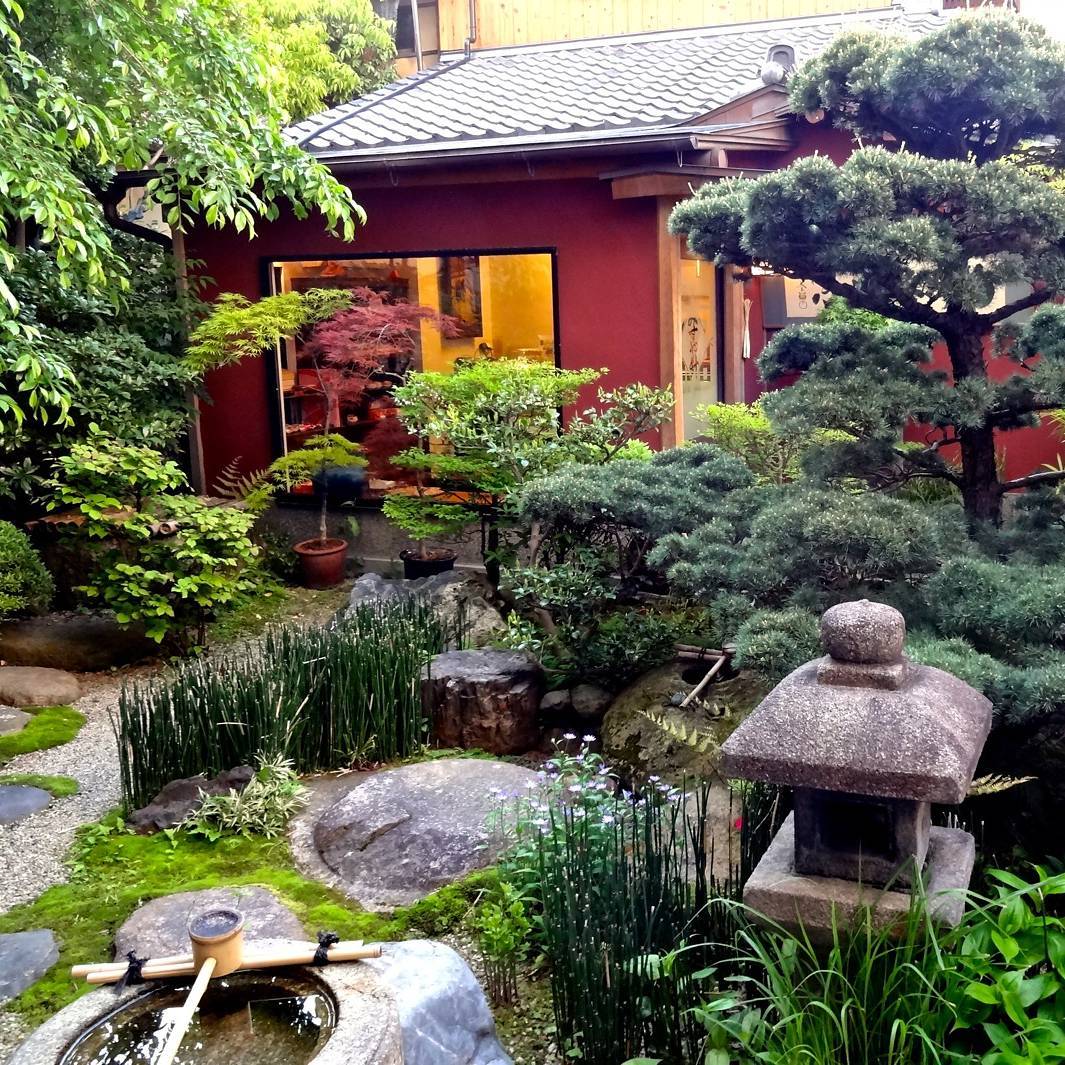
For a quiet garden corner, a weathered, carved stone lamp provides a classic center of attention. Its time-worn surface and traditional form enhance the nearby moss-covered ground, boulders, and thick plants, lending lasting beauty to the quiet space.
Zen Garden With Sculpted Rock Focal Point
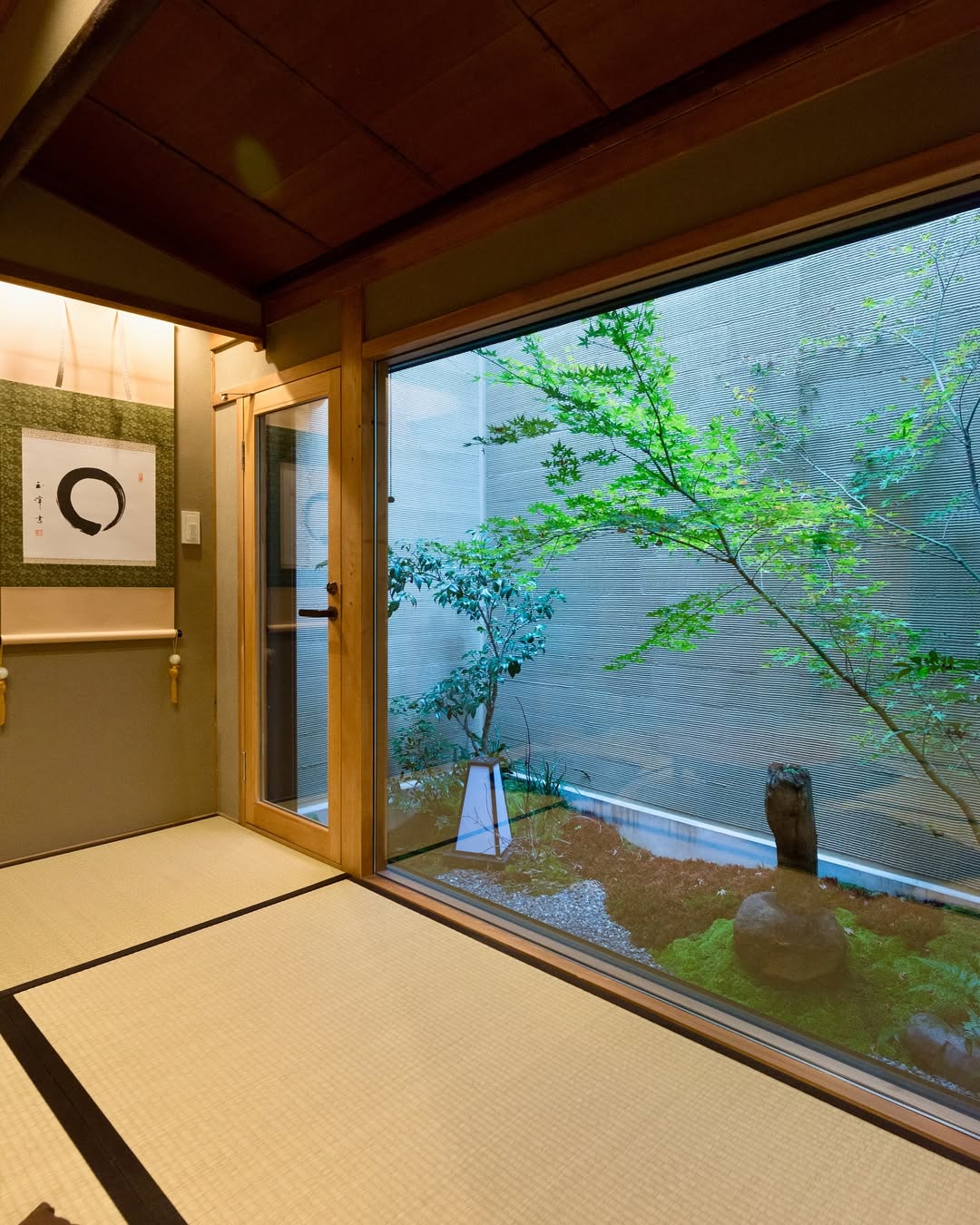
If your mossy garden bed needs a striking centerpiece, consider placing a single, tall, sculpted rock. Its textured surface will contrast beautifully with the soft moss and nearby plants.
Irregular Stone Slabs Create a Natural Path Over Gravel
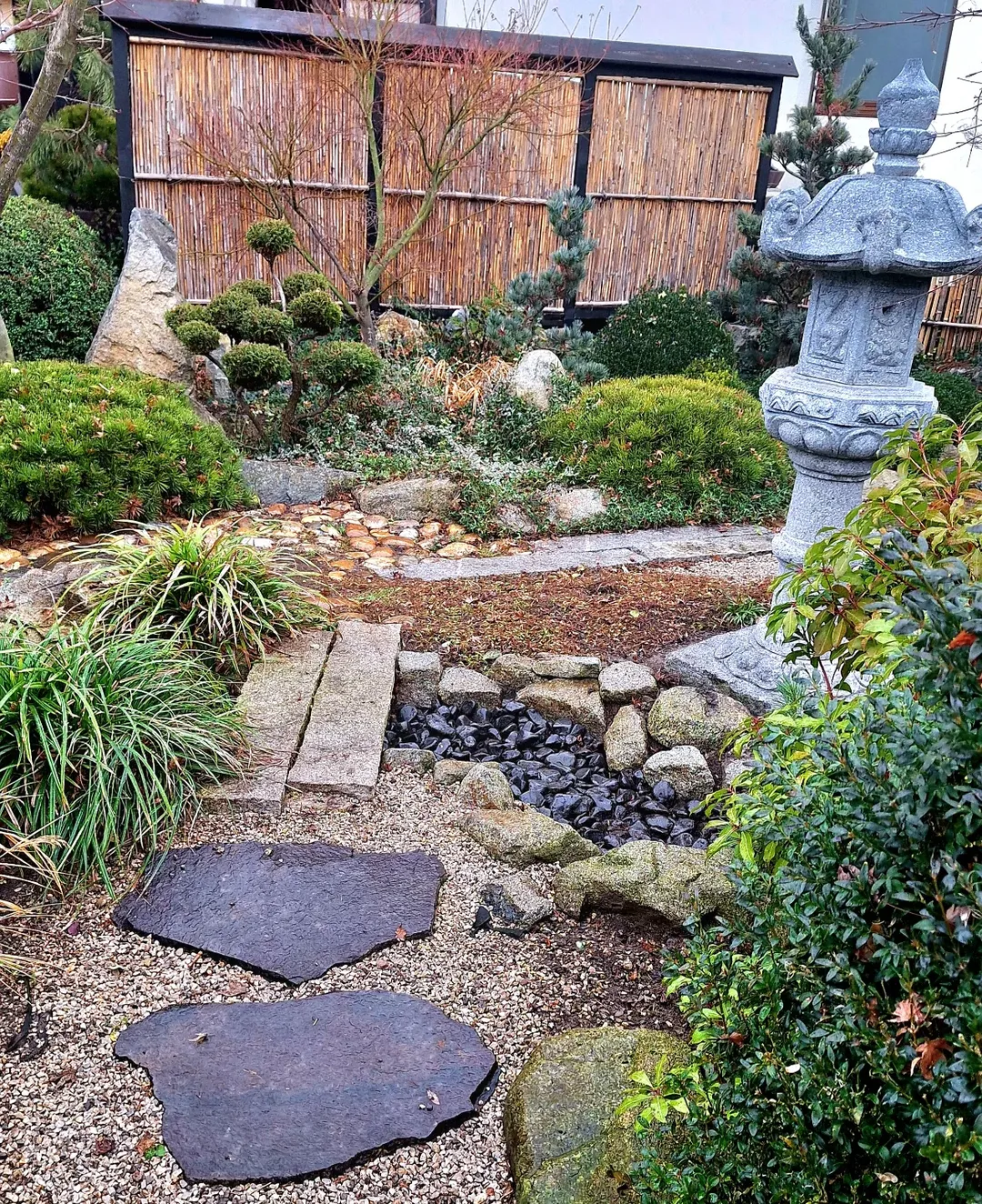
Where a layer of small pebbles stretches, large, irregularly shaped rock slabs form a walking path. These dark, flat pieces interrupt the uniform surface, offering a solid footing and directing visitors along an unforced route.